
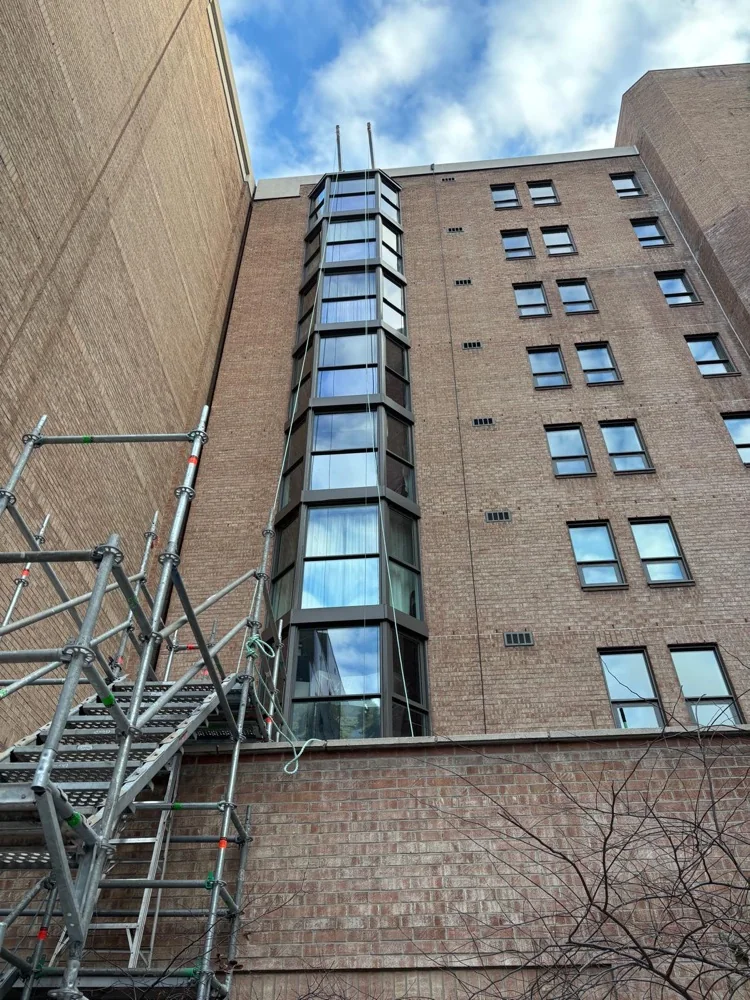
Brick and masonry repair
Brick and masonry services we provide
Brick on most high-rise buildings is a veneer: a single layer of brick tied back to the structure and carried on steel shelf angles at the floor lines. Water that gets behind the brick is meant to drain out through flashing at each angle.
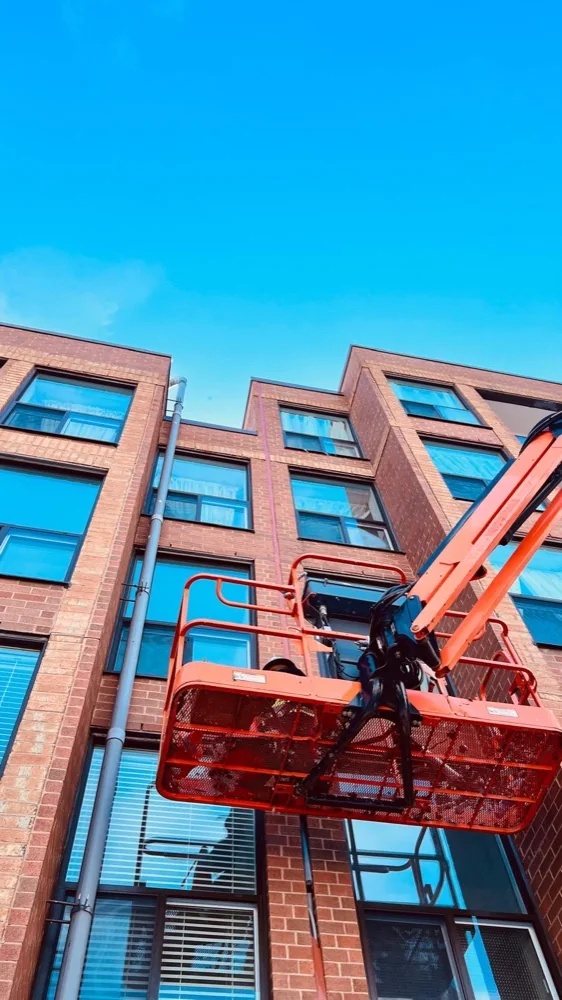
Aspect Restoration repoints and replaces brick, repairs shelf angles, lintels and ties, and installs new through-wall flashing and weep vents. We work with your building's engineer, or can bring in our engineering partner, Apollo Building Group, for structural review and repair design.
- Repointing mortar joints
- Brick replacement and rebuilds
- Shelf angle and lintel repair
- Brick tie replacement
- Through-wall flashing and weep vents
- Parapets, stone and precast sills and copings
How a brick veneer wall ages over 40 years
Sound and draining
The brick is tied back to the building and carried on a steel shelf angle at the floor line. Water that gets behind it drains down the cavity and out over the flashing.
These are typical failure patterns for Ontario's climate, shown for illustration. They are not a prediction for any specific building: materials, detailing and maintenance history can shift these timelines by years. Only a professional assessment can show where your building stands.
Local repairs or a full masonry program
We recommend local repairs when the damage is limited, and a full masonry program when shelf angles, ties or flashing are failing across the building. Our assessment gives your board the scope for both options.
When local repairs are enough
- Mortar erosion is limited to some elevations
- A few bricks are cracked or spalled
- Shelf angles show surface rust only
- Leaks trace to specific joints, sills or copings
When a full masonry program is needed
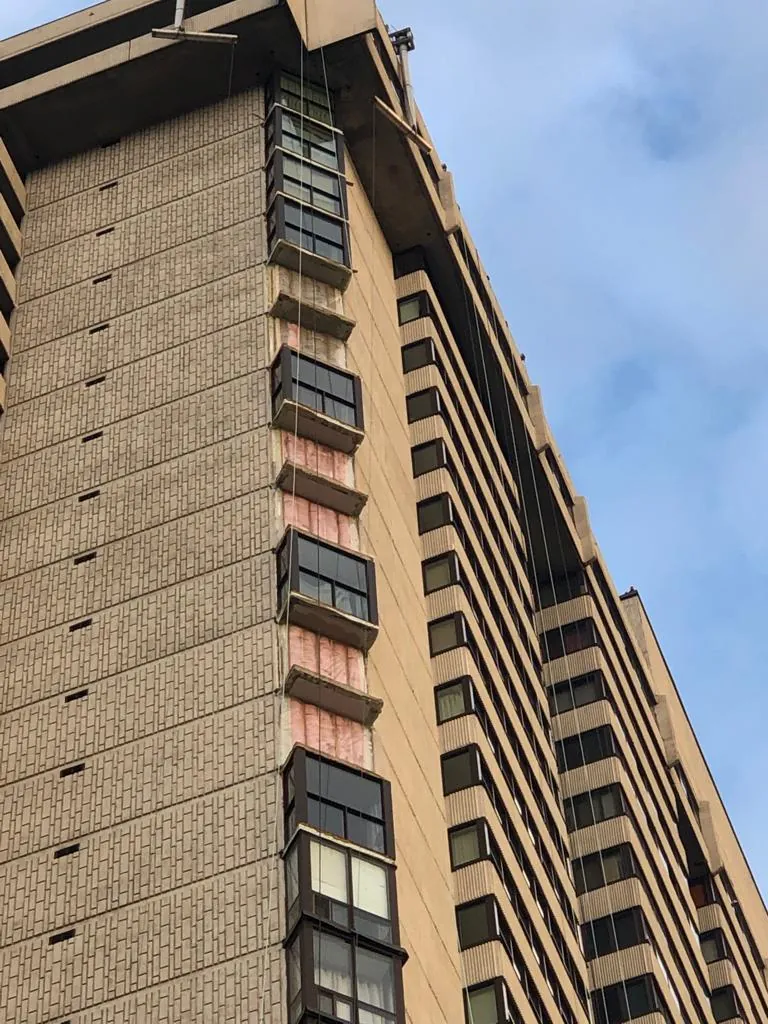
- Shelf angles are rusting and lifting brick on several floors
- Brick is cracked, bulging or loose at the floor lines
- Test openings find corroded or missing ties
- Flashing is missing or stops short of the brick face
Frequently Asked Questions About Brick
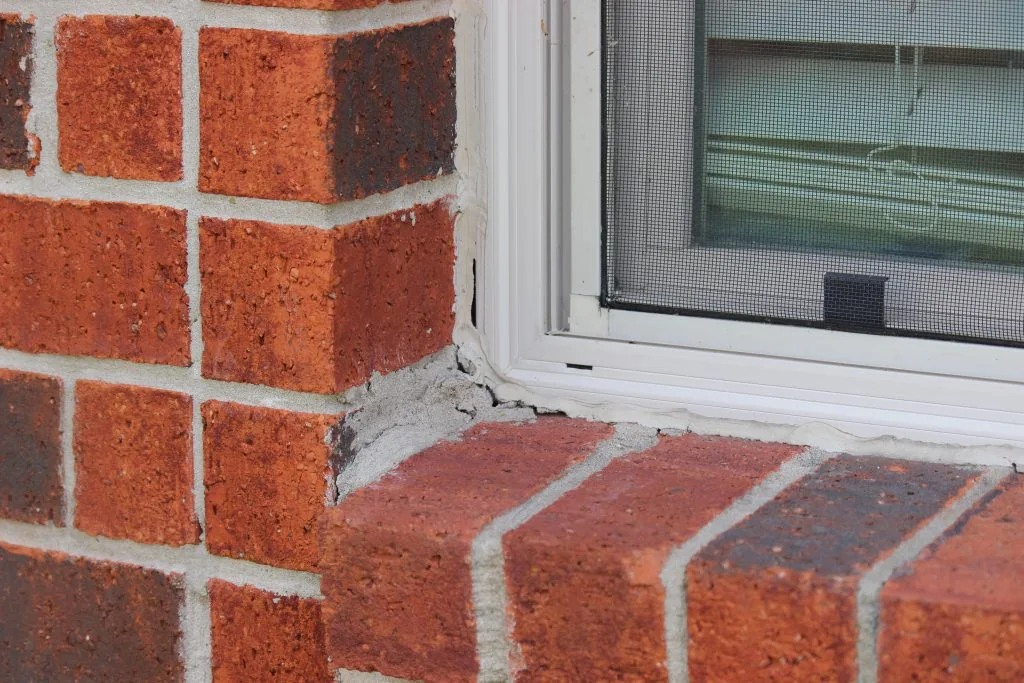
Eroded or cracked mortar joints, cracked, loose or spalled bricks, white efflorescence on the face, rust stains, cracks along the floor lines, and damp walls inside.
A good repointing job is meant to last at least 30 years. Mortar is designed to wear before the brick does, so exposed elevations and poorly pointed joints need it sooner.
Mortar that is softer and more vapour permeable than the brick, matched to the existing mortar. Mortar that is harder than the brick can crack and spall the brick around it.
They are hidden behind the brick, so we open the wall at test locations to inspect the shelf angles, ties and flashing before the scope is set.
It can be. Loose or bulging brick can fall from upper floors. If you see it, report it to your property manager so the area can be checked and made safe.
No. Masonry repairs are done from swing stages or scaffolding. Grinding out mortar and removing brick are noisy and dusty, so residents receive written notice through the property manager before work reaches their area.
Have a question that isn't covered here? Ask us directly
Related building envelope services
 Learn More
Caulking & Sealants
We seal window perimeters and panel joints, and run full-building re-caulking programs.
 Learn More
Metal Cladding & Flashing
We repair or replace metal panels, flashings, parapet caps and copings.
 Learn More
Assessment & Leak Investigation
We trace leaks, water test the envelope and scope the project for your board.
Tell us about your project
Tower or home, anywhere from downtown Toronto to the far side of the province, send us the details and we will come back to you within one business day.