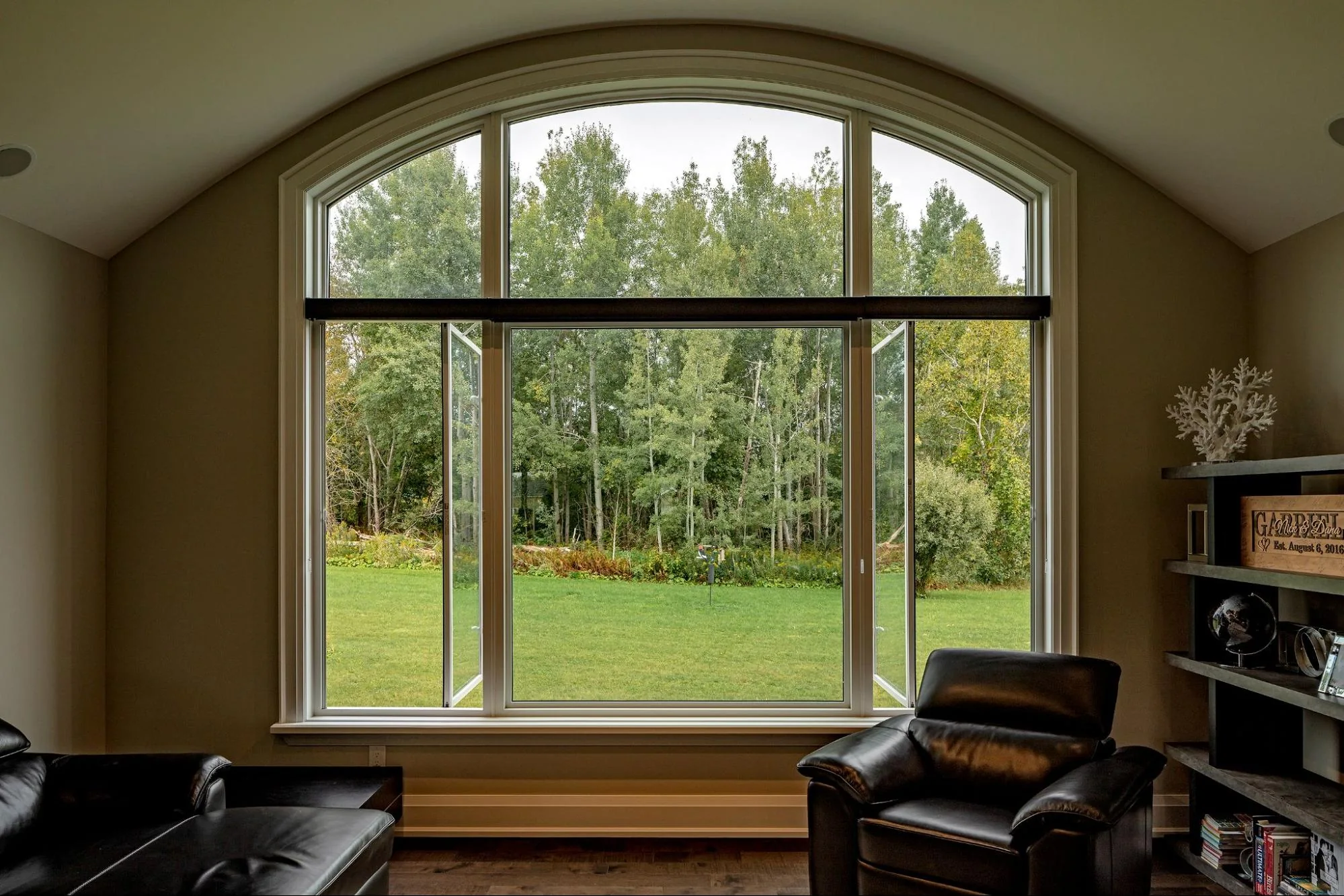
Every window in the house, measured and fitted.
Casement, slider, awning, bay, bow, tilt-and-turn and skylights, in vinyl, aluminium or fiberglass. New builds and replacements, measured on site and installed by our own crews.
Measuring and fitting a replacement window.
Most window problems people live with are not the window. They are the fit: a frame that was never squared, an opening that was never properly sealed, or a unit sized to a catalogue rather than to the hole in the wall. [COMPANY NAME] measures every opening on site before anything is ordered.
From there it is a choice of style and material. Vinyl gives the best thermal performance for the money, fiberglass is the most dimensionally stable and holds its seals longest, and aluminium carries the largest spans on the slimmest sightlines, thermally broken for this climate. [COMPANY NAME] will tell you which the opening actually calls for, including when the honest answer is that the frame is fine and only the glass needs doing.
- Casement, awning, single and double slider, fixed and hung
- Bay, bow and end-vent assemblies built from those units
- Tilt-and-turn and oversized systems for large openings
- Skylights and roof glazing
- Vinyl, aluminium and fiberglass frames
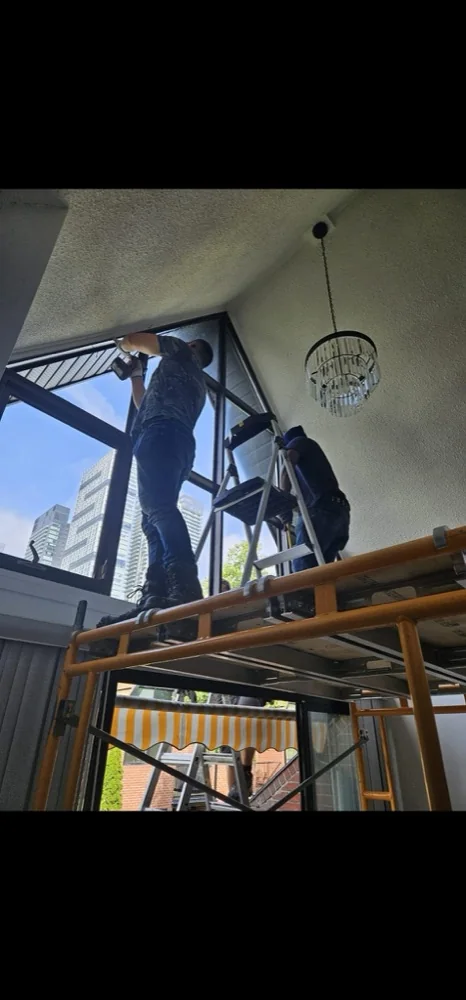
The crews who do your house work on towers.
The same certified installers who run replacement programs on residential towers do the work on houses. A home is a smaller job than a tower, not a looser one: the same site measure, the same floor protection, the same crew.
What an Ontario year asks of a window.
Windows rarely fail all at once. Three things wear them down, and all three run harder here than the catalogue photographs suggest.
Deep cold to direct summer sun, every year.
The same frame handles deep January cold and direct August sun. Everything expands and contracts through that range, thousands of times over. The weak points are always the joints: where glass meets frame, and where frame meets wall.
The problem shows up on the inside.
Warm indoor air meets cold glass and gives up its moisture. On a window that is performing properly that happens rarely. On a single pane or a failed unit it happens all winter, and the water ends up in the sill, then the drywall, then the frame.
The draft is not coming through the glass.
It is coming around the frame, through the gap between the window and the rough opening. That gap was insulated and sealed once, when the house was built. It is the part a proper replacement fixes and a new pane of glass never will.
A window is a system: the glass, the frame, and the seal between the frame and the wall. Replacing one of the three and leaving the other two alone is how people end up disappointed by a window that was perfectly good when it arrived.
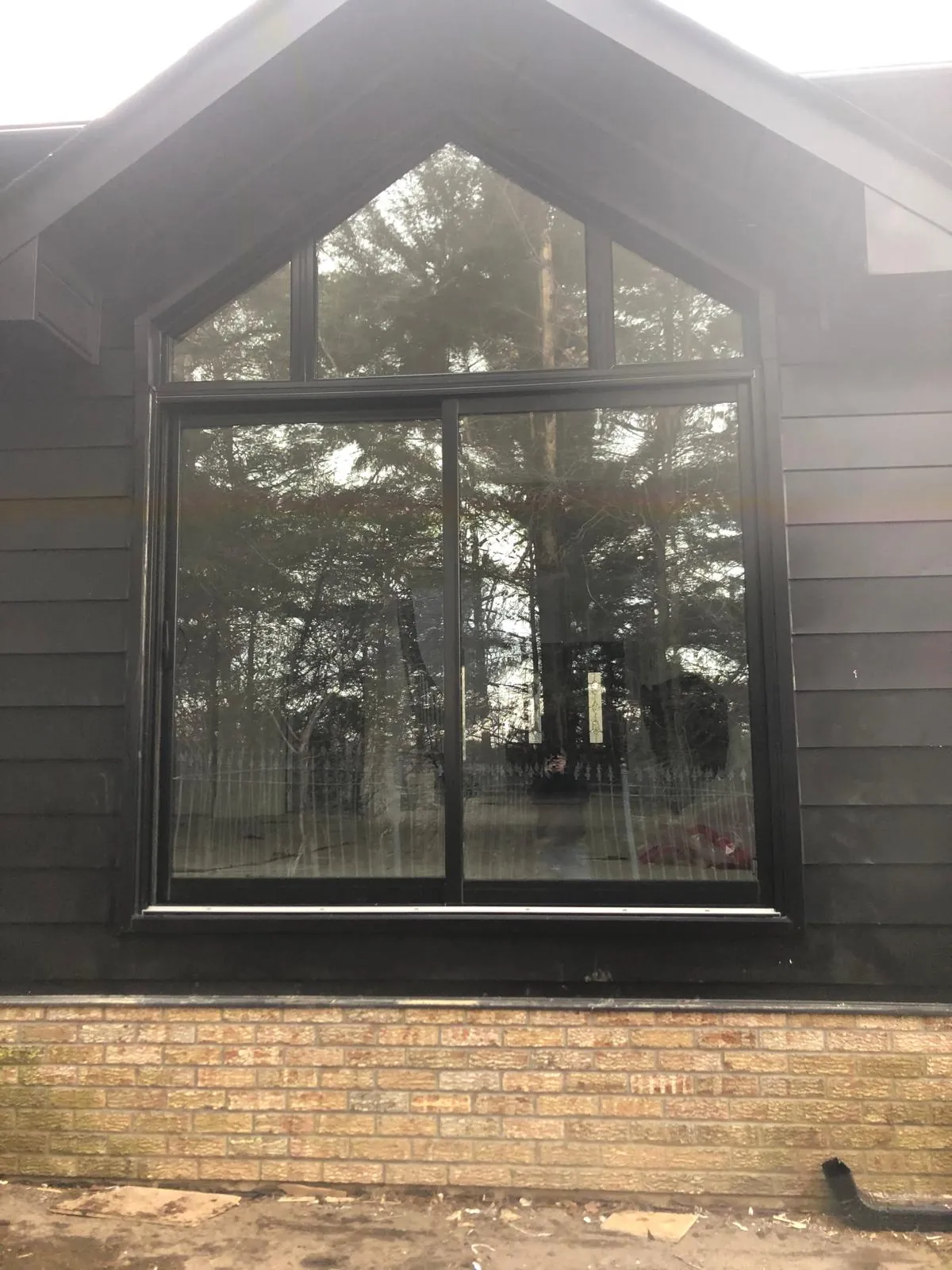
Home windows, answered.
If the frame is sound and only the glass has fogged, the sealed unit can be replaced in the existing frame. If the frame is rotted, racked, or leaking air around its edges, new glass will not fix it. [COMPANY NAME] will tell you which one you are looking at, at the site visit.
Yes, [COMPANY NAME] installs year round. Openings are opened and closed the same working day, one at a time, so the house is never left open overnight and no room is out of use for long.
Yes. Bay and bow are assemblies rather than single units: a set of casements, sliders or fixed windows joined at an angle and supported as one structure. They are built from the same window line, which is why they can be configured to your opening rather than ordered from a fixed list of sizes.
Vinyl gives the best thermal performance for the money and suits most homes. Fiberglass expands and contracts at close to the same rate as the glass it holds, so its seals tend to last longest, and it takes a finish well. Aluminium is the strongest, so it carries the largest spans on the slimmest sightlines, and in this climate it needs a thermal break to avoid condensing. The size of the opening and its exposure usually decide it more than preference does.
Where one is required, yes. A straight replacement into an existing opening usually does not need a permit. Enlarging an opening or altering the structure does, and that goes through the permit process before any work starts.
Have a question that isn't covered here? Ask us directly
Tell us about your project.
Tower or home, send us the details and we will come back to you within one business day.