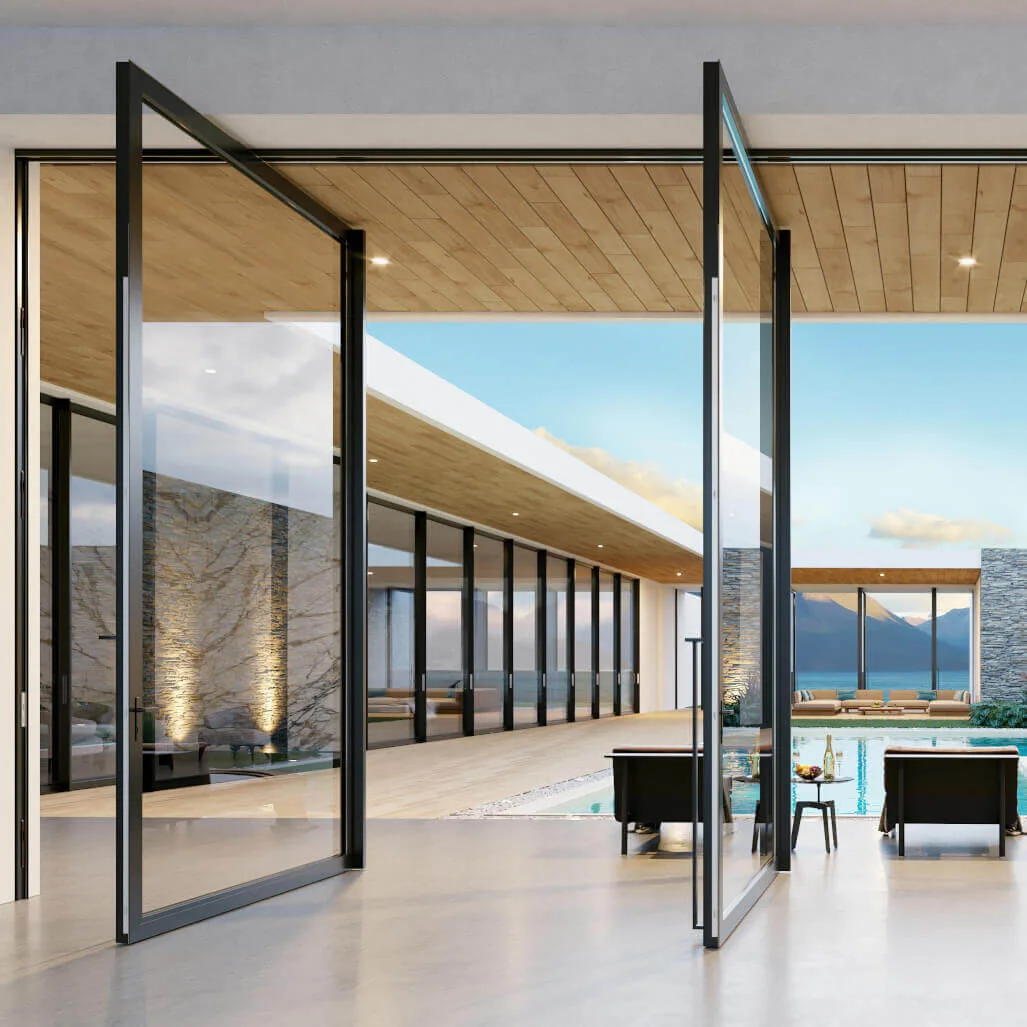
More glass, and a door that still slides in year ten.
Sliding and terrace doors in aluminium, fiberglass and vinyl, including oversized openings built to bring real daylight into the back of the house.
The biggest opening in most houses.
A patio door is usually the largest single piece of glass in the building and the only one people physically operate every day. That combination is why cheap ones fail early: the glass area punishes a weak thermal specification, and the daily use punishes weak hardware.
Aluminium carries the widest spans on the slimmest frames, which is what makes oversized and multi-panel openings possible. Fiberglass and vinyl give better thermal numbers on a standard opening. In practice the size of the opening chooses the material before preference gets a say.
- Sliding patio doors in aluminium, fiberglass and vinyl
- Oversized and multi-panel openings
- Terrace and swing door configurations
- Low-E coated and tempered glass as standard
- Sill drainage and weatherstripping fitted with the door
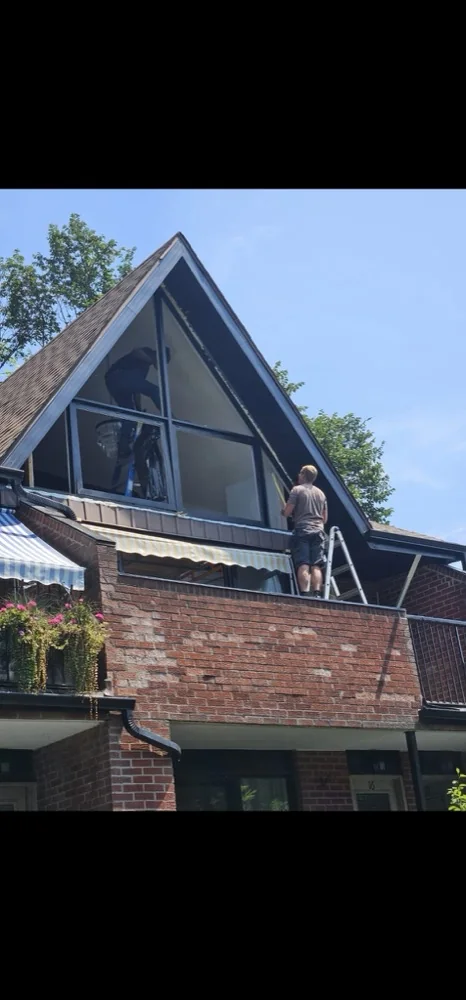
Getting a large panel into the opening.
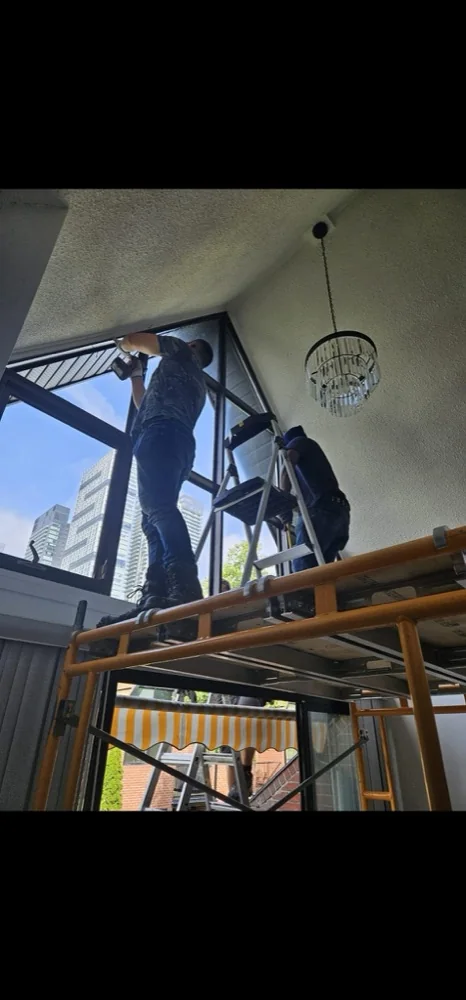
A large sliding panel is heavy and awkward, and getting it into the opening without damaging the unit or the house is the part that goes wrong. [COMPANY NAME] crews handle glass at height on towers, which is the same problem with worse consequences.
What ten years of use does to a sliding door.
Patio doors fail from weather and from use at the same time, and the failures are predictable enough to design against.
The track collects everything.
Sand, grit and leaf debris gather in the bottom track and grind the rollers every time the door moves. It is the most common reason an older patio door becomes hard to slide, and it is a maintenance problem long before it is a replacement one.
A wall of glass behaves like a wall of glass.
A patio door is often the largest glazed area in the house, so its thermal specification matters more than any single window. Low-E coatings and the right cavity fill are what stop that one opening dominating the heating and cooling bill.
The sill has to drain, not just seal.
Rain driven against a patio door runs down the glass and collects at the sill. A properly detailed sill gives that water a way back out. One that relies on a seal alone will eventually push it into the floor instead.
A patio door is the one opening in the house that is a structural element, a thermal element and a moving mechanism at the same time. It is worth specifying properly once rather than replacing twice.
Patio doors, answered.
Larger than most people expect. Aluminium framing carries wide spans on slim sightlines, so multi-panel and oversized openings are achievable where vinyl of the same size would not be. The limit is usually the structure above the opening rather than the door itself.
Sliding takes no floor space, which is why it suits most back walls and balconies. A swing or terrace door seals slightly better and feels more solid in use, but it needs clear space to open into. The room usually decides it.
In most cases yes. [COMPANY NAME] sizes a replacement to the existing rough opening, so the wall, the header and the interior finishes stay as they are. Going significantly larger means structural work and a permit, and we would tell you that before quoting.
Yes. Safety glass is required in a patio door, so on every [COMPANY NAME] install, so it is tempered or laminated as standard rather than an upgrade, and Low-E coating is standard on the units we install as well.
Yes, and it is worth doing. [COMPANY NAME] specifies multi-point locking, an anti-lift detail in the head track, and laminated glass are the three that make a real difference. All three are specified with the door rather than added later.
Have a question that isn't covered here? Ask us directly
Tell us about your project.
Tower or home, send us the details and we will come back to you within one business day.