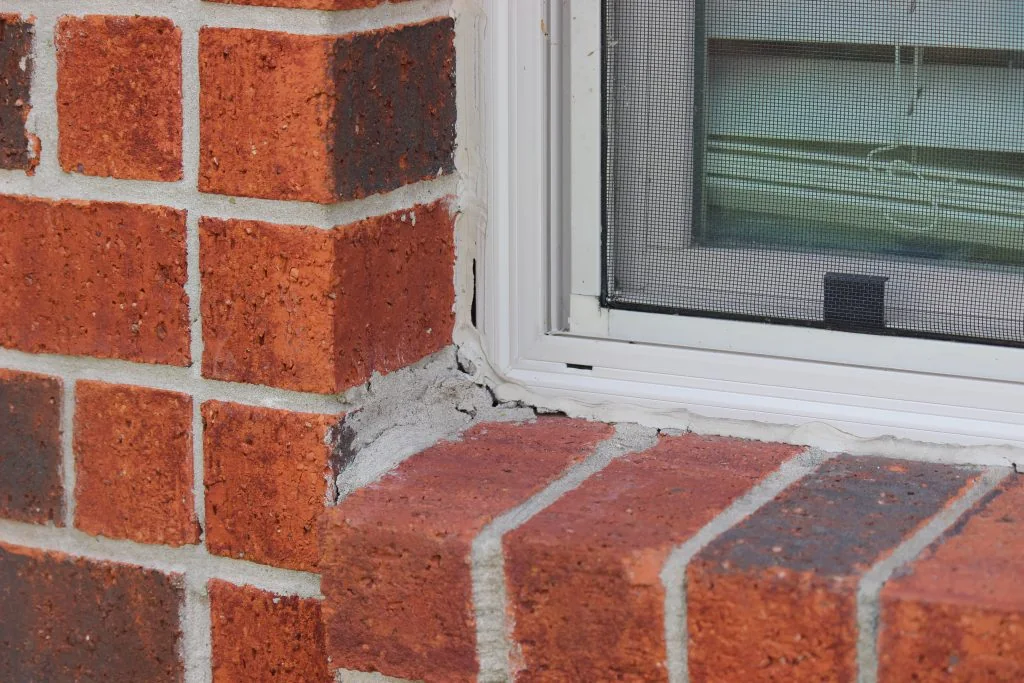
Failed sealant, cut out and replaced.
Sealant renewal and aluminium flashing from the window edge to the rough opening, stopping water before it gets behind the cladding.
What exterior finishing and caulking covers.
Sealant is the outer line of defence on every opening in the building. It is also one of the shortest-lived components on the facade. When it goes, water does not stay at the window: it tracks into the wall assembly, into insulation, and eventually onto somebody’s ceiling.
Renewing it is straightforward work. Done on schedule it costs a fraction of what the resulting water damage does, and repeat water claims are one of the things that push a building’s insurance premiums up.
- Failed sealant cut out, joints prepared and re-sealed
- Aluminium flashing replaced from the window edge to the rough opening
- Backer rod and joint detailing sized to the actual movement
- Leak investigation and targeted remediation
- Full-elevation programs or single problem openings
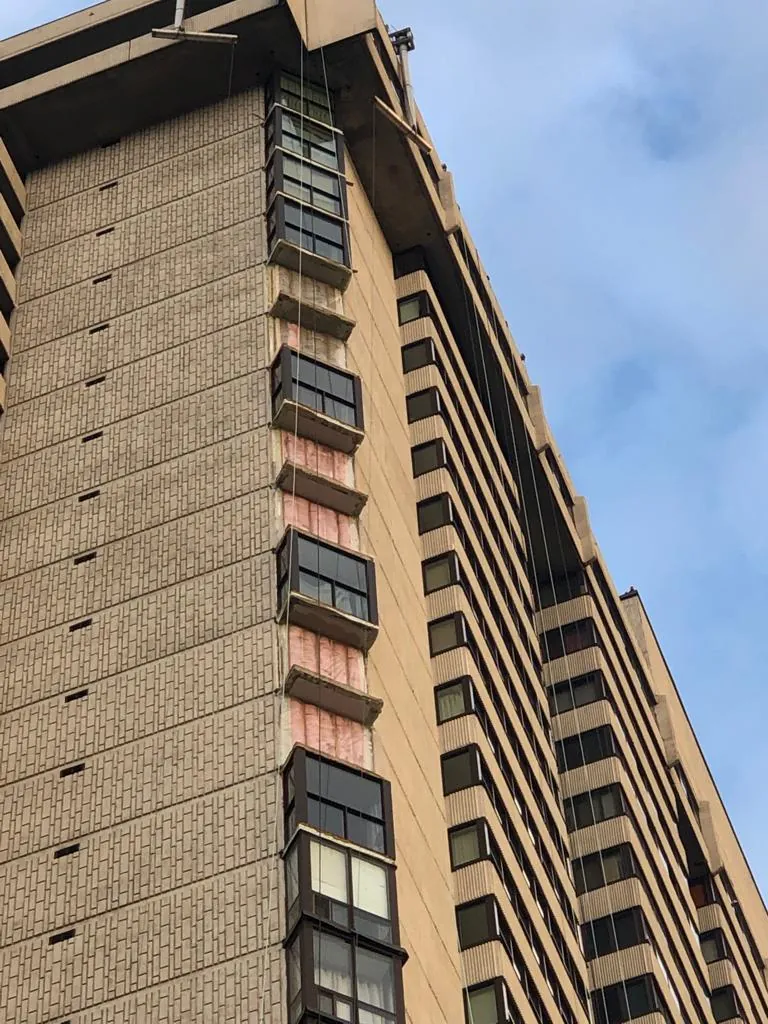
Every joint on the building is somewhere at height.
For [COMPANY NAME], sealant work means working the full face of the building, which puts crews on swing stages, scaffolding or lifts for most of the job. Access is planned before the work is scheduled.
What a Toronto winter does to a joint.
Sealant does not wear out evenly. It fails at the joints that move the most, and this climate moves them hard.
Water gets in, then turns to ice.
Once a joint opens even slightly, water sits in it. It freezes, expands and widens the gap a little further. Every cycle makes the next one worse, which is why a hairline failure never stays hairline through a winter here.
The building is never quite still.
Frames expand in the sun and contract overnight, and the structure moves with wind and temperature. New sealant stretches with that movement. Sealant that has hardened tears instead, usually at the corners first.
South and west faces age first.
UV breaks down the sealant surface over time, and the elevations that get the most sun lose their elasticity years before the shaded ones. It is why a building often needs one face done well before the others.
Sealant is the outer line, not the only one. Where water has already got behind the flashing, new caulking alone will not stop it. That is why the opening gets assessed before anything is quoted.
Sealant and finishing, answered.
Look for cracking, gaps at the corners, sealant that has hardened or pulled away from one side of the joint, and staining below the opening. Drafts and unexplained damp on interior finishes are usually further along the same problem.
No. It is the outer line of defence on the envelope. Once it fails, water tracks into the wall assembly and the damage is to insulation, framing and interior finishes long before anyone sees it at the window.
Where it needs it. [COMPANY NAME] renews aluminium flashing from the window edge back to the rough opening, because sealing over a failed flashing detail only hides the path the water is already taking.
Yes. Elevations age at different rates, and the sun-facing faces usually need attention first. Work can be scoped to one elevation, one stack, or a set of problem openings.
It is dealt with before any work starts. Testing, removal and disposal run through a licensed abatement contractor [COMPANY NAME] brings in, with the opening quarantined while they work. Our scope picks up once clearance is in hand.
Have a question that isn't covered here? Ask us directly
Tell us about your project.
Tower or home, send us the details and we will come back to you within one business day.